-
Your shopping cart is empty!

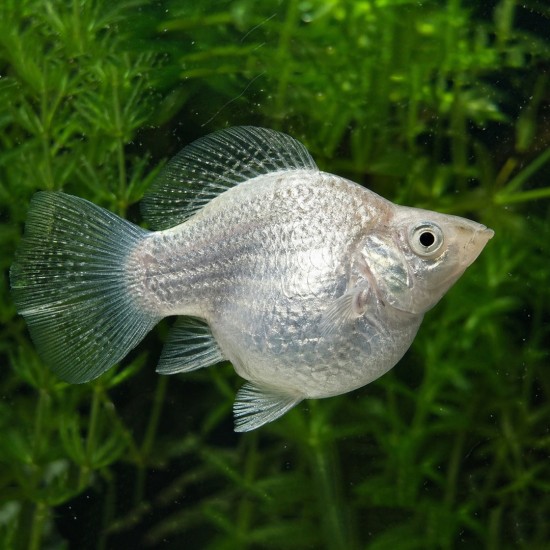
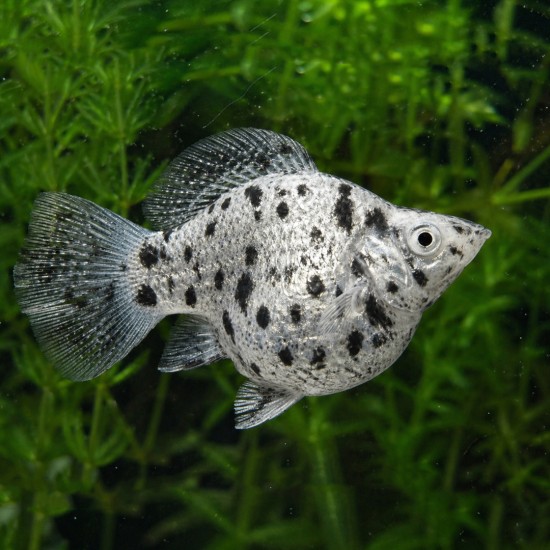
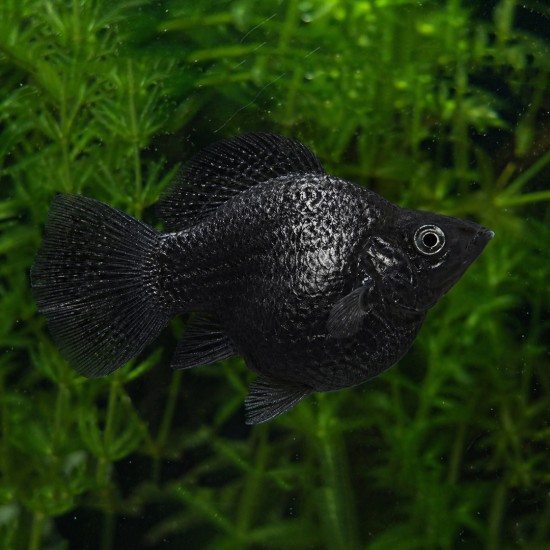
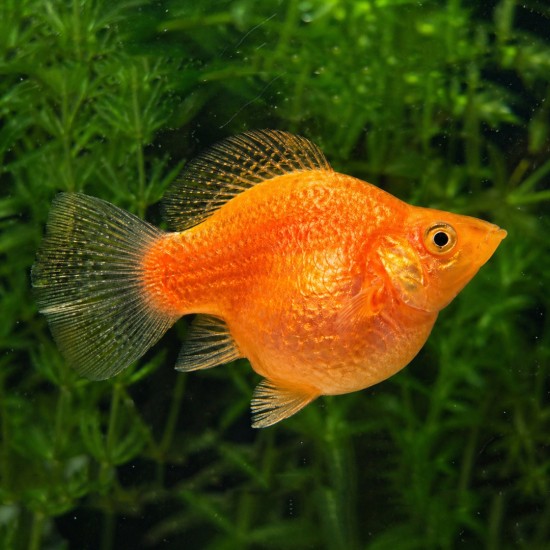
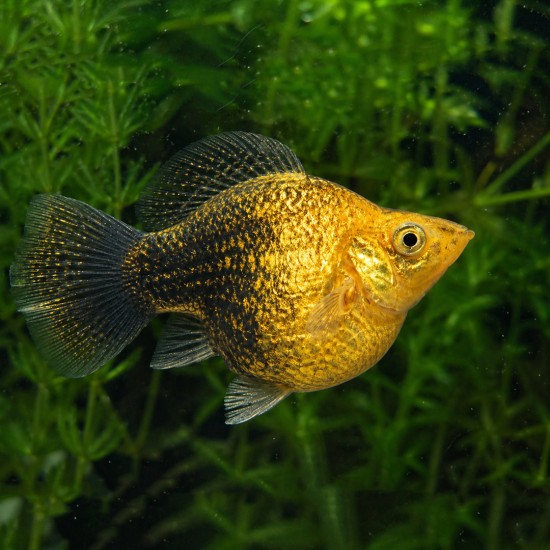


Balloon Molly (Poecilia Latipinna Balloon Molly) is a peaceful, social and attractive aquarium fish, suitable for a well-maintained community aquarium. It is distinguished by its characteristic shortened and rounded body, which gives it its distinctive "balloon" appearance. Its coloration may be black, yellow, white, orange or spotted.
It does best in a group of at least 4-6 individuals , in an aquarium of 80-100 litres or more . It prefers stable, clean and well-filtered water, a temperature of 24-28°C and a slightly alkaline pH of 7.5-8.5 .
Due to its distinctive body shape, it swims more slowly than standard mollies and is not suitable for keeping with aggressive, very fast-moving or fin-nipping fish.
Basic Information
| Parameter | Information |
|---|---|
| Name | Balloon Molly |
| Fish Type | Livebearing aquarium fish |
| Behaviour | Peaceful, social and active |
| Minimum Tank Size | 80-100 litres or more |
| Temperature | 24-28°C |
| pH | 7.5-8.5 |
| Water Hardness | Moderately hard to hard water |
| Group | At least 4-6 individuals |
| Tank Mates | Platies, swordtails, larger guppies, bristlenose catfish, Corydoras and peaceful tetras that tolerate harder water |
| Unsuitable Tank Mates | Aggressive cichlids, barbs, very fast-moving or fin-nipping fish |
| Diet | Omnivorous, with plant-based foods included regularly |
| Suitable Foods | Tropical Guppy, Tropical Spirulina Flakes, Fluval Bug Bites Tropical Formula Granules, Hikari Micro Wafers |
| Breeding | Livebearer; the female gives birth to fully developed fry approximately every 4-6 weeks |
| Lifespan | Approximately 3-5 years |
| Difficulty Level | Easy, but requires stable and clean water |
| Important | It swims more slowly due to its rounded body shape and should not be kept with stressful or excessively fast-moving fish |
Care Requirements
Balloon Molly requires a spacious, well-established and fully cycled aquarium. Good filtration is very important because mollies have a healthy appetite and can place a considerable load on the water. Ammonia and nitrite levels should be 0 mg/l .
The aquarium can be planted with hardy plants such as Java Moss, Anubias, Vallisneria and Sagittaria . Plants provide hiding places and help reduce stress, but there should also be plenty of open swimming space.
The water should be moderately hard to hard, with a slightly alkaline pH. Adding salt is not necessary in a well-maintained freshwater aquarium. If salt is used, it should be added carefully and gradually, as many plants and some tank mates do not tolerate it well.
Feeding
Balloon Molly is omnivorous, but plant-based foods should be included regularly in its diet. Suitable foods include plant-based flakes, spirulina, tropical fish granules, frozen or dried brine shrimp, bloodworms, tubifex and small amounts of blanched vegetables such as courgette, spinach or cucumber.
Suitable prepared foods include Tropical Guppy , Tropical Spirulina Flakes , Fluval Bug Bites Tropical Formula Granules and Hikari Micro Wafers .
Feed moderately 1-2 times a day, offering only as much food as the fish can consume within 1-2 minutes. Overfeeding is one of the most common causes of poor water quality.
Behaviour and Compatibility
Balloon Molly is a peaceful and social fish. It is best kept in a small group, with more females than males - for example, 2-3 females per 1 male . This helps reduce stress and excessive courtship.
Suitable tank mates include platies, swordtails, larger guppies, bristlenose catfish, Corydoras and peaceful tetras that tolerate harder water , as well as other peaceful livebearing fish.
It is not suitable for keeping with aggressive cichlids, barbs, very fast-moving or nervous fish , or with species that require soft, acidic or cooler water.
Breeding
Balloon Molly is a livebearing fish. Under good conditions, the female can give birth to fully developed fry approximately every 4-6 weeks .
To give the fry a better chance of survival, it is advisable to provide dense vegetation, Java Moss, floating plants or a separate breeding tank. Adult fish may eat the fry, so hiding places are important.
The fry can be fed finely crushed food, specialised food for baby fish, newly hatched brine shrimp or microworms.
Common Problems
Balloon Molly is relatively easy to keep, but it is sensitive to poor water quality, sudden changes, stress and overcrowding. Signs of problems may include clamped fins, rapid breathing, resting on the bottom, loss of appetite, white spots, rubbing against objects or fading coloration.
The best prevention is a stable temperature, good filtration, regular water changes, moderate feeding and careful selection of tank mates.
Summary
Balloon Molly is a beautiful, peaceful and interesting fish, suitable for a community aquarium with peaceful tank mates. Due to its rounded body, it swims more slowly and requires a calm environment without strong currents, sharp decorations or excessively active fish.
With proper care, stable water conditions and a balanced diet, it can live for approximately 3-5 years and make a wonderful addition to a well-maintained aquarium.