-
Your shopping cart is empty!

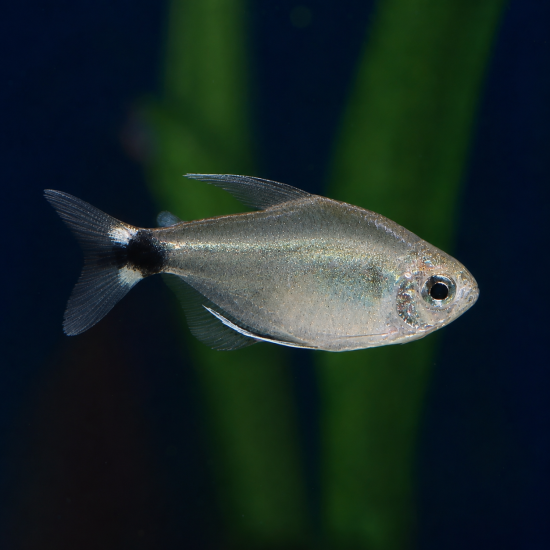

Kitty Tetra (Hyphessobrycon heliacus) is a small, peaceful and very attractive schooling fish, well suited to a well-established community or planted aquarium. It is distinguished by its delicate yellowish-golden coloration, slender body and peaceful behaviour.
The name heliacus is associated with the fish's "sun-like" coloration, which stands out particularly well against a dark substrate, green plants and subdued lighting.
The species reaches approximately 2.5-3 cm and does best in a group of at least 8-10 individuals. Due to its small size, it should only be kept with other small and peaceful tank mates.
| Basic Information | |
|---|---|
| Parameter | Information |
| Scientific Name | Hyphessobrycon heliacus |
| Size | Approximately 2.5-3 cm |
| Minimum Tank Size | 50-60 litres |
| Recommended Tank Size | 80+ litres |
| Temperature | 23-27°C |
| pH | 6.0-7.5 |
| Water Hardness | Soft to moderately hard |
| Behaviour | Peaceful, small and schooling |
| Recommended Group | At least 8-10 individuals |
| Difficulty Level | Easy to moderate |
| Lifespan | Approximately 3-5 years |
| Breeding | Egg-laying fish |
Care Requirements
Kitty Tetra prefers clean, stable and well-filtered water. A well-established aquarium with mature biological filtration, moderate water flow and regular partial water changes is most suitable.
Ammonia and nitrite levels should be 0 mg/l. Suitable plants include Anubias, Cryptocoryne, Java Fern, Vallisneria, Java Moss, Hygrophila, Limnophila and floating plants.
The aquarium should provide hiding places, driftwood, a dark substrate and an open area for swimming. Adding salt is neither suitable nor necessary.
Feeding
Kitty Tetra is omnivorous and accepts a varied diet. Due to its small mouth, food should be fine and easy to swallow.
Suitable foods include fine flakes, microgranules, powdered food for nano fish, as well as small live or frozen foods such as brine shrimp, daphnia, cyclops and small bloodworms.
Suitable prepared foods include Tropical Microvit, Tropical Supervit Mini Granulat, Hikari Micro Pellets and Fluval Bug Bites Tropical Formula Small Granules.
Feed moderately 1-2 times a day, offering only as much food as the fish can consume within 1-2 minutes.
Behaviour and Tank Mates
Kitty Tetra is a peaceful, social and schooling fish. It does best in a group, where it displays more natural behaviour and more intense coloration.
Suitable tank mates include small tetras, neon tetras, Silvertip Tetras, Black Neon Tetras, small rasboras and microrasboras, Pygmy Corydoras, Salt and Pepper Corydoras, Otocinclus, Amano Shrimp and other small, peaceful species.
It is not recommended to keep this species with large, aggressive or very active fish, including large cichlids, large angelfish, aggressive barbs and predatory fish.
Breeding
Kitty Tetra is an egg-laying fish. Breeding in an aquarium is possible, but requires a separate tank, clean and soft water, subdued lighting and protection for the eggs.
The bottom can be covered with Java Moss, a spawning mop or fine mesh. After spawning, the adult fish should be removed.
The fry initially require infusoria, rotifers or specialised fine fry food, and can later be offered newly hatched brine shrimp and very fine dry food.
Common Problems and Prevention
The most common problems are associated with unstable water conditions, a group that is too small, strong water flow, overfeeding or unsuitable tank mates.
Signs of stress may include fading coloration, clamped fins, hiding, loss of appetite, rapid breathing or separating from the group.
Provide a stable temperature, gentle filtration, regular small water changes, a sufficiently large group and carefully selected tank mates. It is not recommended to introduce this species into a newly established aquarium.
Summary
Kitty Tetra is an excellent choice for a peaceful community, nano or planted aquarium. It is suitable for aquarists who appreciate small, peaceful and less commonly kept tetras.
It looks best in a larger group, where its delicate yellowish-golden coloration and natural schooling behaviour can be fully appreciated. With proper care, it can live for approximately 3-5 years.